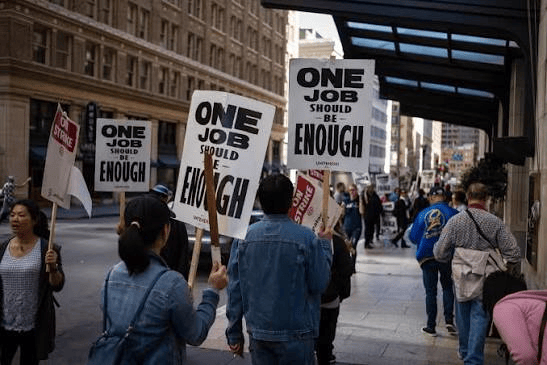
Labor unions are increasing their membership numbers in the United States, although the rate of increase differs greatly by state. Recent studies reveal that the labor policy of the states, especially those related to collective bargaining laws, have an impact on the rate at which union membership grows.
According to a study carried out by the Illinois Economic Policy Institute and the Project for Middle Class Renewal of the University of Illinois at Urbana-Champaign, the number of union members increased in the United States by more than 411,000 in the previous year. It was the largest increase in the past nine years.
There were about 14.6 million union members at the end of the previous year, representing 10% of the total labor force in the country.
State Labor Policies Make a Difference
Union membership numbers are not evenly distributed across the nation. Studies show that union membership saw much more growth in states that have laws that favor collective bargaining protection as compared to states with right-to-work laws.
The right-to-work law prohibits employers from reaching an agreement that forces employees to become members of the union or paying dues in return for having the job.
Presently, there are 26 states with right-to-work laws.
As per the 2026 State of the Unions report, union memberships are at 14 percent in the states with favorable collective bargaining laws while right-to-work states have a union membership figure at around 5%.
Experts from this research say that union organizing will be influenced by the government’s policy.
Union Membership and Worker Earnings
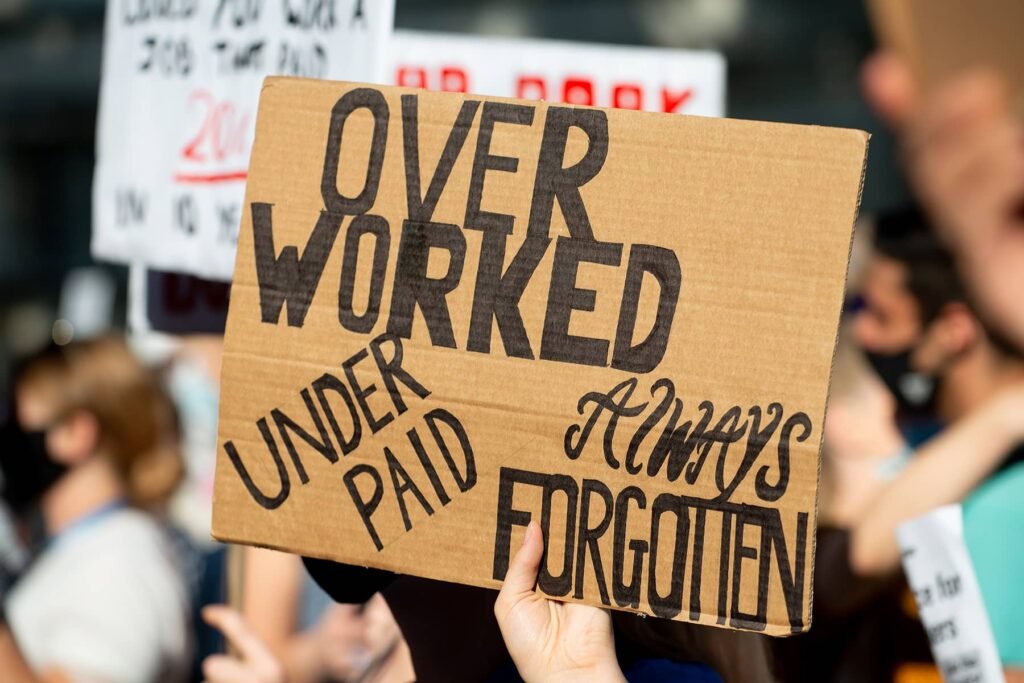
The difference in average hourly earnings of workers in collective bargaining states and right-to-work states was found out in the report as well.
When the effect of different prices levels was controlled for, the average hourly earnings was estimated to be $37.24 for workers in collective bargaining states versus $34.16 in right-to-work states.
Proponents of organized labor tend to cite such differences in order to show that collective bargaining could potentially benefit workers. But whether this is true or not has always been a debatable issue in economics circles.
Unions Still Face Significant Challenges
Even with the recent surge in numbers, unions are still not as prevalent as they were at their peak in the history of organized labor in the United States.
Back in 1954, more than one-third of the American workforce was in unions. Currently, only about one-tenth of the workforce is in unions.
There is also opposition to labor unions from certain state governments and lawmakers. Certain states have made attempts to create laws that would restrict union organizing or collective bargaining rights, especially in the South.
Federal legislation has also been an obstacle to public sector unions. The changes to collective bargaining rights for federal employees have been challenged legally, and therefore, their impact on union membership is unclear.
On the other hand, there have also been attempts by workers to form unions in spite of these difficulties.
New Laws Expand Organizing Opportunities in Some States
While some states have chosen to limit the power of organized labor in one way or another, others have gone a different route.
Thus, during 2026, several states enacted laws that provided increased protections to workers and opportunities for collective bargaining.
For instance, Illinois passed a bill providing additional rights to organize and engage in collective bargaining to rideshare and gig economy workers. Meanwhile, the state of Washington has extended collective bargaining rights to student employees at universities.
Likewise, Virginia legislators passed a bill intended to repeal Virginia’s longstanding ban on public sector collective bargaining, which could open collective bargaining opportunities to hundreds of thousands of public sector employees.
This particular bill was vetoed by Gov. Abigail Spanberger, who agreed with the goals of the bill but had some reservations about how to implement it and how much it will cost local governments.
The above-mentioned examples show how important it is for the future of organized labor to make the right political choices on the state level.
Public Attitudes Toward Unions Are Changing
Public opinion may also be driving the new wave of interest in organized labor. Surveys conducted by Gallup have shown increasing approval for unions among Democrats and Republicans alike.
The cost of living increases, worries about job security, and changing workplace dynamics may be motivating employees to think about collective bargaining as a way of improving their bargaining position at work.
But while support for unions may be high, it does not mean that all workers or policy makers agree on their economic impact.
Unions that are very powerful may sometimes drive up labor costs, limit employment opportunities, or reduce business investments. In 2025, scholars working for the Mercatus Center published a review of many studies and concluded that strong unions may produce negative results, including lower employment growth under some circumstances.
Consequently, the economic impact of unionization remains controversial, with different research findings emerging depending on the indicators used.
What the Future Could Hold for Organized Labor
The rise in union membership in recent times proves that organized labor is still a crucial element of the American labor force. Nevertheless, the rate at which people are unionized is far from the level recorded historically.
The future increase in union membership will largely be determined by state laws, federal rules, and attitudes towards collective bargaining in the working environment.
While states that give legal backing to organizing unions will be expected to continue registering high numbers of union membership in the future, right-to-work states will still register low union members. At the same time, shifts in sectors such as technological advancement, transport industry, health care industry, and the gig economy can give employees room to organize. Changes in health care rules can change access to and costs of healthcare services.
Conclusion
The rise in union membership in recent times proves that organized labor is still a crucial element of the American labor force. Nevertheless, the rate at which people are unionized is far from the level recorded historically.
The future increase in union membership will largely be determined by state laws, federal rules, and attitudes towards collective bargaining in the working environment.
While states that give legal backing to organizing unions will be expected to continue registering high numbers of union membership in the future, right-to-work states will still register low union members. At the same time, shifts in sectors such as technological advancement, transport industry, health care industry, and the gig economy can give employees room to organize. Changes in health care rules can change access to and costs of healthcare services.
FAQs
Yes. More than 411,000 workers joined unions during the year covered by the 2026 State of the Unions report, bringing total union membership to more than 14.6 million workers.
State labor laws can influence how easily workers organize and negotiate collectively. Research has found higher union membership rates in states with stronger collective bargaining protections than in states with right-to-work laws.
No. Union membership is considerably lower than it was during the middle of the 20th century. In 1954, more than one-third of American workers belonged to unions, compared with approximately 10% today.