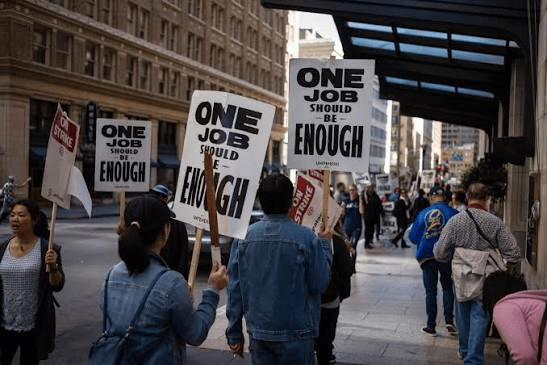
Labor unions are gaining members across the United States, but the pace of growth varies significantly from state to state. Recent research suggests that state labor policies, particularly rules surrounding collective bargaining, play an important role in determining where union membership expands most quickly.
According to a 2026 report from the Illinois Economic Policy Institute and the Project for Middle Class Renewal at the University of Illinois at Urbana-Champaign, the United States added more than 411,000 union members during the previous year. That represented the largest annual increase in union membership since 2008.
More than 14.6 million workers were members of unions at the end of the year, accounting for roughly 10% of the nation’s workforce.
State Labor Policies Make a Difference
The distribution of union members is not uniform across the country. Research indicates that states with stronger collective bargaining protections experienced substantially greater union membership growth than states with right-to-work laws.
Right-to-work laws generally prohibit agreements that require employees to join a union or pay union dues as a condition of employment. There are currently 26 states with such laws.
The 2026 State of the Unions report found that union membership rates were approximately 14% in states where collective bargaining protections are stronger, compared with about 5% in right-to-work states.
Researchers involved in the study argue that government policy can either create an environment where organizing is easier or introduce barriers that make union expansion more difficult.
Union Membership and Worker Earnings
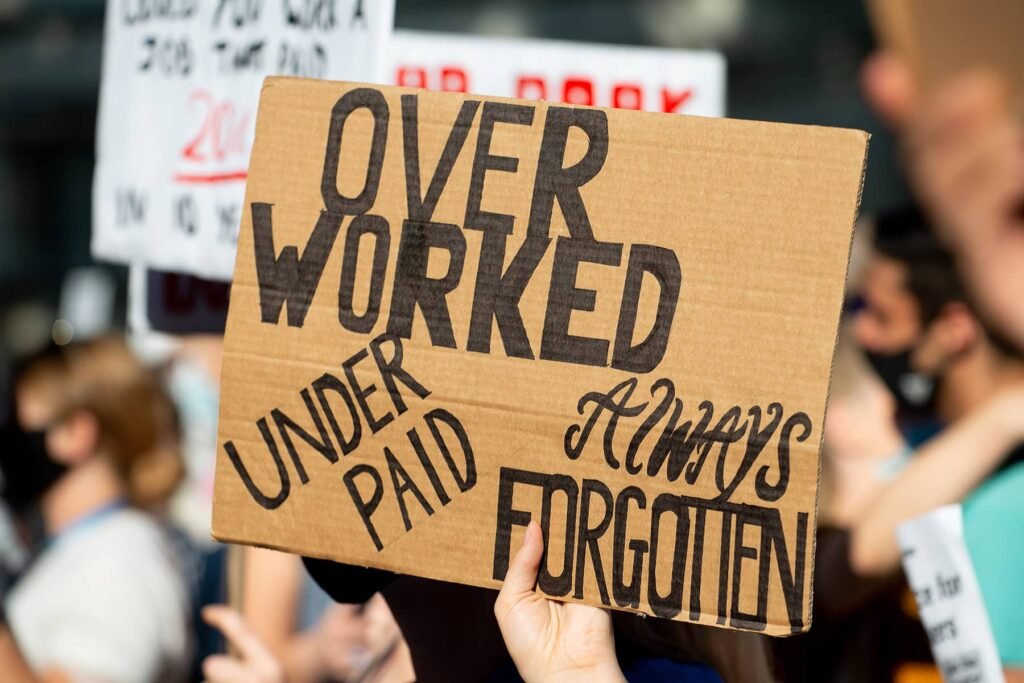
The report also identified differences in average hourly earnings between workers in collective bargaining states and those in right-to-work states.
After accounting for differences in the cost of living, average hourly earnings were estimated at $37.24 in collective bargaining states compared with $34.16 in right-to-work states.
Supporters of organized labor often point to these differences as evidence that collective bargaining can improve workers’ economic outcomes. However, the relationship between unionization, wages and employment remains a subject of debate among economists and policy researchers.
Unions Still Face Significant Challenges
Despite recent membership growth, unions remain far less common than they were during the height of organized labor in the United States.
In 1954, more than one-third of American workers belonged to unions. Today, union membership represents approximately one-tenth of the workforce.
Labor organizations also face opposition from some state governments and policymakers. Several states have introduced measures designed to limit union organizing or reduce collective bargaining rights, particularly in parts of the South.
Federal policies have also created uncertainty for public-sector unions. Changes affecting collective bargaining rights for federal employees have faced legal challenges, making their long-term impact on union membership difficult to determine.
At the same time, some workers have continued to pursue union representation despite these challenges.
New Laws Expand Organizing Opportunities in Some States
While certain states have attempted to restrict organized labor, others have moved in the opposite direction.
During 2026, lawmakers in several states approved measures designed to strengthen worker protections and expand collective bargaining opportunities.
Illinois, for example, approved legislation giving rideshare and gig workers greater rights to organize and bargain collectively. Washington expanded collective bargaining rights to certain university student employees.
Virginia lawmakers also approved legislation that would have removed the state’s longstanding prohibition on public-sector collective bargaining. The proposal could have opened collective bargaining opportunities to hundreds of thousands of public employees.
However, the measure was vetoed by Gov. Abigail Spanberger, who supported the broader goal but requested changes related to implementation and local government budgeting.
These examples demonstrate how significantly state-level political decisions can influence the future of organized labor.
Public Attitudes Toward Unions Are Changing
Public opinion may also be contributing to the renewed interest in organized labor. Gallup polling has indicated growing support for unions among both Democrats and Republicans.
Rising living costs, concerns about job security and changing workplace conditions may be encouraging more employees to consider collective bargaining as a way to strengthen their position at work.
However, support for unions does not necessarily mean that all workers or policymakers agree on their economic effects.
Critics argue that powerful unions can sometimes create higher labor costs, reduce employment opportunities or discourage business investment. A 2025 review from researchers associated with the Mercatus Center examined numerous studies and argued that stronger unions can have unintended consequences, including slower job growth in certain circumstances.
As a result, the economic impact of unionization continues to be debated, with research producing different conclusions depending on the measures and circumstances examined.
What the Future Could Hold for Organized Labor
The recent increase in union membership suggests that organized labor remains an important part of the American workforce. However, the overall unionization rate remains well below historical levels.
Future growth could depend heavily on state laws, federal policies, workplace organizing efforts and public attitudes toward collective bargaining.
States that provide greater legal protection for organizing may continue to see stronger union activity, while right-to-work states could maintain lower membership rates. At the same time, changes in industries such as technology, transportation, health care and the gig economy could create new opportunities for workers to organize. Changes in health care policy can also affect access to medical services and the costs faced by workers and their families.
Conclusion
The latest union membership figures point to renewed momentum for organized labor in the United States, but the trend is far from uniform. State policies appear to play an important role in determining how easily workers can organize and bargain collectively.
With some states expanding worker protections while others seek to limit union influence, the future of organized labor will likely continue to be shaped by state and federal policy decisions. The growing interest in unions also suggests that workplace representation remains a significant issue for American workers, even as debates continue over the broader economic effects of unionization.
FAQs
Yes. More than 411,000 workers joined unions during the year covered by the 2026 State of the Unions report, bringing total union membership to more than 14.6 million workers.
State labor laws can influence how easily workers organize and negotiate collectively. Research has found higher union membership rates in states with stronger collective bargaining protections than in states with right-to-work laws.
No. Union membership is considerably lower than it was during the middle of the 20th century. In 1954, more than one-third of American workers belonged to unions, compared with approximately 10% today.