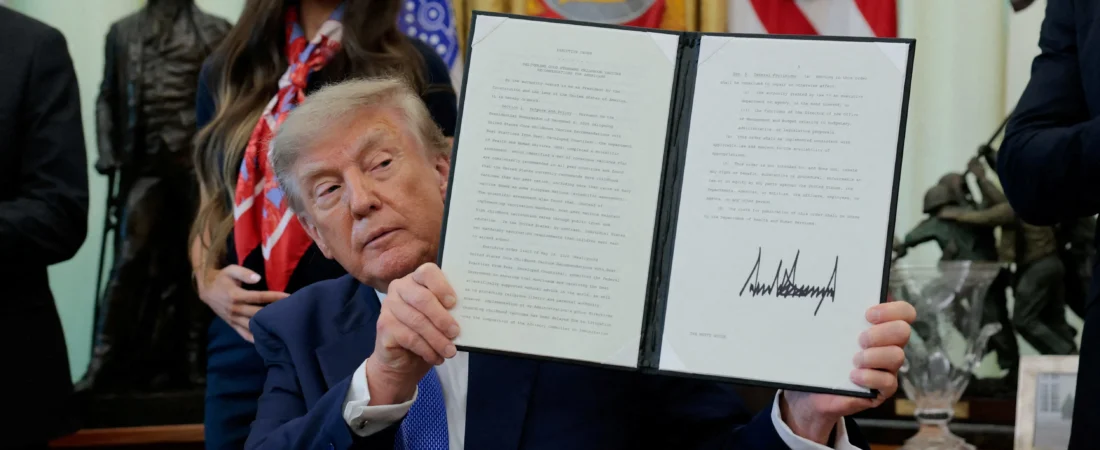
President Donald Trump has issued an executive order directing federal health officials to examine and potentially revise the way childhood vaccines are recommended in the United States. The move has sparked debate among policymakers, medical professionals and public health experts over how changes could affect vaccination practices and access.
Executive Order Targets Childhood Vaccine Recommendations
The executive order, issued on August 10, calls for the administration to explore changes to the current childhood immunization framework. One of the most notable provisions involves directing federal officials to develop plans for separating the combined measles, mumps and rubella (MMR) vaccine into individual shots.
The order also calls for childhood vaccines to be organized into three broad categories: vaccines recommended for all children, vaccines intended for certain high-risk groups, and vaccines administered through shared clinical decision-making between healthcare providers and families.
The practical impact of these provisions remains uncertain because the childhood immunization schedule is developed through federal public health processes and can be subject to additional regulatory, scientific and legal considerations.
Debate Over Separating the MMR Vaccine
The proposed approach to the MMR vaccine has become a major point of discussion. The combined vaccine protects against measles, mumps and rubella and has been extensively studied over several decades.
Medical organizations and researchers have consistently found the MMR vaccine to be safe and effective. Public health specialists have therefore questioned the scientific basis for replacing the combined vaccination with separate injections.
Separating the vaccines could also require children and families to make additional healthcare visits. Some pediatric healthcare professionals have warned that increasing the number of appointments could create logistical challenges, particularly for families who already face difficulties accessing medical care.
Questions About Autism Claims
The executive order also comes amid renewed political discussion about a possible connection between childhood vaccines and autism.
Scientific research does not support the claim that vaccines cause autism. Researchers generally describe autism as a complex condition involving multiple contributing factors, including genetic and environmental influences. Changes in diagnosis and greater awareness have also been identified as factors behind increases in reported autism diagnoses.
Public health experts have encouraged parents to rely on established scientific evidence and consult qualified healthcare professionals when considering vaccination decisions.
Potential Impact on Families and Pediatricians
If vaccination recommendations ultimately become more fragmented or require separate visits, the changes could have practical consequences for families and pediatric practices.
Additional appointments may mean more time away from school or work, increased transportation requirements and greater difficulty completing recommended immunizations on schedule. Pediatricians could also face additional administrative and scheduling demands.
These concerns are particularly relevant because childhood vaccination programs depend not only on vaccine availability but also on timely administration and consistent communication between healthcare providers and families.
Previous Attempts to Change Vaccine Recommendations
The latest executive order follows earlier efforts by the Trump administration to modify the federal childhood vaccine schedule.
In January, federal health officials moved toward reducing the number of diseases covered by routine childhood vaccine recommendations. That action faced legal challenges, and a federal judge blocked the effort in March.
The latest order represents another step in the administration’s broader effort to review federal vaccine policy. Its eventual effect will depend on how federal agencies implement the directives and whether proposed changes withstand scientific, administrative and legal scrutiny.
What Parents Should Know
The executive order does not automatically eliminate existing vaccines or establish an entirely new vaccination schedule. Parents and caregivers should therefore distinguish between proposed policy changes and recommendations currently provided by healthcare professionals.
Families with questions about childhood immunizations can discuss vaccine timing, potential risks and individual medical circumstances with a pediatrician or other qualified healthcare provider. Healthcare professionals can also help families understand whether a child has missed a recommended dose and what steps may be appropriate.
Conclusion
The Trump administration’s executive order has opened a new debate over how childhood vaccines should be recommended and administered in the United States. Proposals involving the MMR vaccine, vaccine categorization and separate medical visits could have significant implications if they are ultimately implemented.
For now, many details remain subject to further federal action and review. As policymakers consider potential changes, scientific evidence, vaccine safety data, healthcare access and the practical needs of families will remain important factors in evaluating the future of childhood immunization policy.
FAQs
No. The executive order directs federal agencies to develop plans and review vaccine recommendations. It does not by itself establish an entirely new childhood vaccination schedule.
The combined MMR vaccine has been extensively studied and is considered safe and effective by major medical and public health organizations. Parents with questions about vaccination should consult a qualified healthcare provider.
Potentially. Administering vaccines during separate visits could require additional appointments, which may increase scheduling, transportation and time-related challenges for families and pediatric healthcare practices.