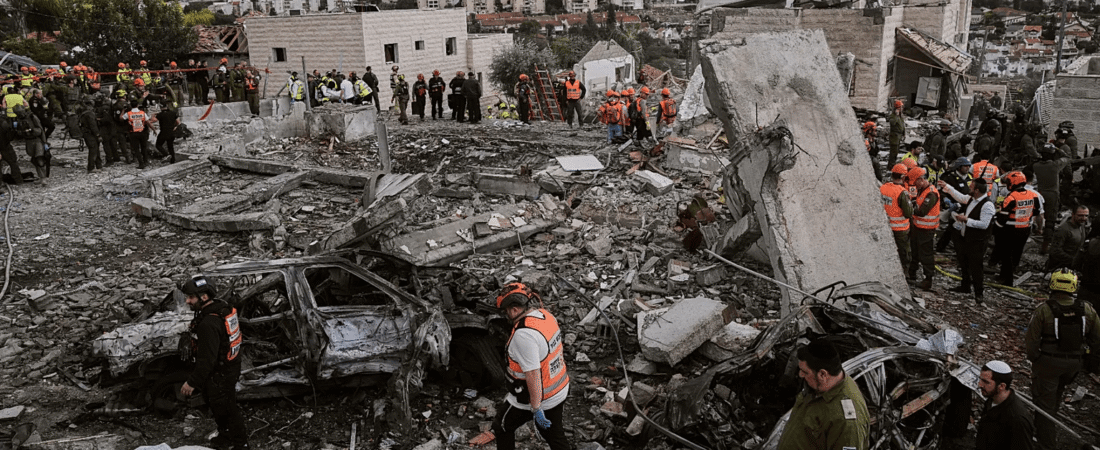
Tensions between the United States and Iran have intensified again following a series of military attacks and retaliatory actions across the Middle East. The latest developments represent a significant escalation after a period of relative calm in the conflict.
The confrontation has also involved countries hosting U.S. military facilities, raising concerns about the wider regional consequences of the renewed fighting.
Iran Reports Missile Attacks on U.S. Forces in the Region
Iran’s Islamic Revolutionary Guard Corps said it had launched ballistic missiles at two U.S. military air bases in Jordan on Monday. Iranian state media reported that the attacks caused significant damage.
Jordan’s military said it intercepted eight missiles but did not publicly identify their source.
Iran later said that it had also targeted U.S. military personnel at an American air base in the United Arab Emirates. The developments have increased pressure on countries in the region that host U.S. forces while attempting to avoid becoming directly involved in the conflict.
U.S. Conducts Strikes on Iranian Rocket Launchers
The latest Iranian attacks followed American military action against Iranian forces.
The United States said it carried out airstrikes on Iranian rocket launchers located on Larak Island in the Strait of Hormuz. American officials said the launchers were being prepared for attacks involving rockets and sea mines.
The Strait of Hormuz is a strategically important waterway for global energy shipments. Rising tensions between the United States and Iran have also raised concerns about the potential impact on shipping, energy supplies, and global markets.
Regional Allies Face Increased Pressure
The renewed military activity has placed additional pressure on U.S. allies in the Middle East.
Jordan and the United Arab Emirates both maintain close relationships with Washington, while also having strong interests in maintaining regional stability. The reported attacks demonstrate the difficulty these countries face as tensions between the United States and Iran increase.
Regional governments must balance security concerns with efforts to prevent the conflict from expanding into a broader confrontation involving multiple countries.
Iran’s President Heads to a Regional Summit
Iranian President Masoud Pezeshkian was expected to attend a Shanghai Cooperation Organisation summit as the military situation developed.
The organization includes several major regional powers and seeks to strengthen cooperation among its members and partners. Russian President Vladimir Putin was also expected to hold separate discussions with Pezeshkian and Chinese President Xi Jinping during the gathering.
The diplomatic meetings could provide an opportunity for discussions about the conflict, regional security, and international efforts to reduce tensions.
Washington Pursues Economic Pressure on Tehran
Military action is occurring alongside an expanding U.S. campaign aimed at increasing economic pressure on Iran.
U.S. Treasury Secretary Scott Bessent is expected to push efforts to isolate Iran economically during meetings with G20 counterparts. Washington has warned countries and financial institutions about potential consequences if they continue supporting activities that the United States believes benefit Tehran.
The strategy combines financial pressure with military measures, creating additional uncertainty for businesses and financial institutions operating across the region.
Iran Calls for Regional Unity
Iran’s Supreme Leader Mojtaba Khamenei has called on Muslim countries in the region to unite against the United States and Israel.
The statement reflects Tehran’s effort to frame the conflict as a broader regional struggle rather than a confrontation limited to the United States and Iran.
Such rhetoric could further complicate diplomatic efforts, particularly as neighboring countries attempt to protect their own security and economic interests.
Financial Institutions Face Additional Scrutiny
The conflict is also affecting the financial sector.
The Central Bank of the United Arab Emirates announced an urgent examination of branches of Banque Misr, an Egyptian state-owned bank operating in the UAE. The review followed U.S. action involving the institution and Washington’s broader efforts to restrict financial channels that could potentially assist Iran.
Financial institutions across the Middle East may face increased scrutiny as governments attempt to comply with sanctions while maintaining legitimate commercial relationships.
What the Escalation Could Mean for the Region
The latest exchange of attacks highlights the potential for the U.S.-Iran conflict to spread beyond the two countries directly involved.
American military installations and personnel are located across several Middle Eastern countries, while Iran maintains relationships with regional groups and governments. Any further escalation could therefore create security risks for neighboring states.
The Strait of Hormuz is another major concern because of its importance to international energy markets. Continued military activity around the waterway could increase uncertainty for shipping, energy supplies, and global markets.
Conclusion
The renewed U.S.-Iran confrontation has entered a more dangerous phase, with American strikes followed by Iranian attacks targeting U.S. military positions in the region. The involvement of locations in Jordan and the UAE demonstrates the wider security implications of the conflict.
Alongside military operations, Washington is increasing economic pressure on Tehran, while Iranian leaders are seeking greater regional unity and diplomatic engagement with countries such as Russia and China.
The coming weeks could be important for determining whether the latest escalation remains limited or develops into a broader regional conflict. Diplomatic efforts, regional cooperation, and decisions by the United States and Iran will play a major role in shaping what happens next.
FAQs
The latest escalation followed U.S. strikes against Iranian rocket launchers, after which Iran reported missile attacks targeting U.S. military facilities and personnel in the region.
The Strait of Hormuz is a major international shipping route for energy supplies. Military activity in or around the waterway could affect commercial shipping and contribute to uncertainty in global energy markets.
There is a possibility of wider regional consequences because U.S. military forces operate from bases in several countries and Iran has relationships with regional actors. Continued attacks could increase pressure on neighboring governments and raise the risk of further escalation.