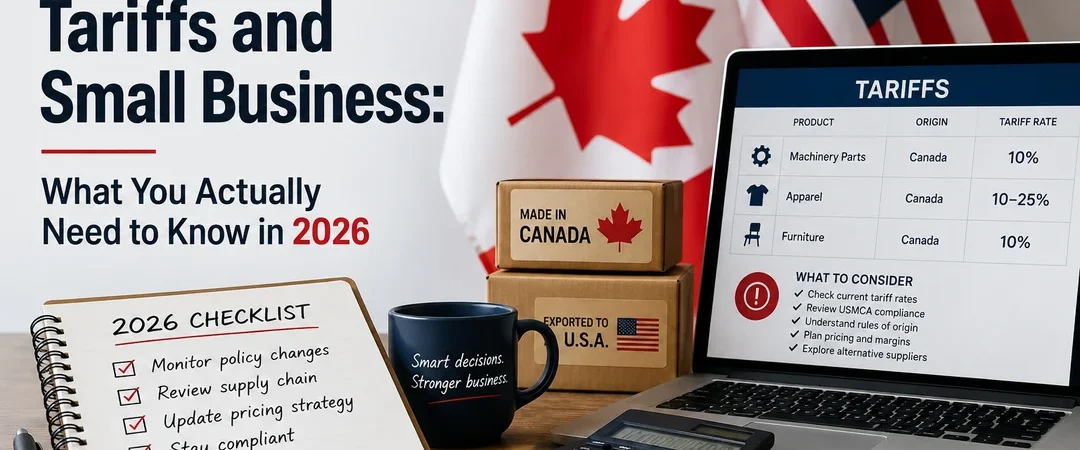
Small businesses operating across the U.S.-Canada border are facing a combination of higher trade costs, weaker demand, and rising energy expenses. New tariffs between the two countries are increasing the cost of certain cross-border transactions, while elevated oil prices are adding pressure to shipping, manufacturing, and day-to-day operations.
The effects are particularly noticeable among businesses that depend on international customers or imported materials and equipment. Even companies whose products are not directly subject to tariffs can experience indirect consequences as customers delay purchases, suppliers increase prices, and transportation becomes more expensive.
Tariffs Add New Costs to Cross-Border Trade
The latest trade measures between the United States and Canada cover a relatively limited portion of total bilateral goods trade. However, their effects can be significant for individual small businesses that depend heavily on customers or suppliers in the neighboring country.
Some products crossing the border are now subject to substantial import taxes. For businesses selling high-value equipment, even a percentage-based tariff can add tens or hundreds of thousands of dollars to a transaction.
These additional expenses can make products less competitive in foreign markets. Businesses may have to absorb part of the cost, increase prices, or reconsider whether certain cross-border sales remain financially practical.
Small Businesses Face More Than Tariff Costs
Tariffs are only one part of the financial pressure facing many businesses. Energy prices have also increased amid ongoing geopolitical tensions, creating additional expenses for companies that depend on transportation, machinery, manufacturing, or imported components.
Higher fuel prices can affect businesses at several stages of their operations. Shipping companies may increase rates to account for fuel expenses, while suppliers may add surcharges to cover higher transportation costs.
For smaller companies with limited financial reserves, several moderate increases can accumulate quickly.
Cross-Border Demand Can Change Even Without a Direct Tariff
Trade restrictions can also influence customer behavior. Consumers and businesses may delay purchases because of uncertainty about final costs, customs charges, or future trade policies.
Companies can also experience weaker demand because customers become more cautious about buying products from across the border.
This creates a challenge for businesses that may not be directly affected by a tariff. A product can remain technically exempt from a new import tax while the company still experiences declining sales because customers are uncertain about the broader trade environment.
Manufacturers and Equipment Suppliers Feel the Pressure
Businesses selling specialized equipment can be particularly vulnerable to changes in cross-border trade costs.
Industrial equipment often carries a high purchase price, meaning a large tariff can dramatically change the final cost for a customer. Companies that rely on international orders may therefore need to reconsider pricing, production locations, delivery arrangements, or target markets.
Some businesses are also exploring alternative revenue streams. Companies with skilled employees and specialized manufacturing capabilities may look toward domestic industries and customers if international demand becomes more difficult to maintain.
Diversifying the customer base can help reduce dependence on one market, although developing new markets can take considerable time and investment.
Higher Shipping Costs Compound the Problem
Transportation costs are another concern for companies involved in international trade.
When oil prices rise, businesses can face higher expenses for trucking, freight, and other forms of transportation. These increases can affect both finished products and the components required to manufacture them.
For a small company, the impact can be significant even when the underlying product remains competitively priced. A business may receive an order at an acceptable margin but later discover that shipping and logistics costs have reduced the profitability of the transaction.
Agricultural Businesses Face Additional Challenges
Agricultural producers are also exposed to changing trade conditions. Export-dependent industries can be particularly sensitive to tariffs because losing access to an important foreign market can leave producers searching for alternative buyers.
If more producers attempt to sell their goods domestically at the same time, increased supply could place additional pressure on prices.
Agricultural businesses may therefore have to balance several risks simultaneously, including changing export demand, input costs, transportation expenses, and domestic pricing conditions.
Diversification Becomes More Important
The uncertainty surrounding international trade is encouraging some small businesses to consider diversification.
This can involve finding additional suppliers, expanding into domestic markets, developing new products, or identifying industries that are less exposed to cross-border trade.
Diversification does not eliminate the effects of tariffs or higher energy costs, but it can reduce a company’s reliance on a single customer group, supplier, or geographic market.
For businesses that have the necessary skills and resources, developing alternative revenue sources may also provide greater flexibility when market conditions change.
What Small Businesses Can Do
Businesses facing higher trade and operating costs can review several areas of their operations.
They can reassess supplier agreements, monitor transportation expenses, review product margins, and communicate potential cost changes with customers. Companies that depend heavily on international sales may also benefit from evaluating additional markets.
Keeping accurate records of tariff-related expenses and shipping increases can help business owners understand which costs are having the greatest effect on profitability.
At the same time, businesses may need to distinguish between temporary increases and longer-term structural changes before making major operational decisions.
Conclusion
The combination of tariffs and elevated energy costs is creating a more complicated operating environment for small businesses involved in U.S.-Canada trade. Higher import expenses can affect pricing and demand, while increased fuel and shipping costs add another layer of pressure.
The experience varies considerably by industry and company. Businesses with limited exposure to international trade may see relatively modest effects, while companies that depend heavily on cross-border customers, imported materials, or international shipping can face much greater challenges.
As trade policies and energy markets continue to change, monitoring costs, diversifying revenue sources, and maintaining flexibility can become increasingly important for small businesses navigating uncertain conditions.
FAQs
Tariffs can increase the cost of importing or exporting products. Businesses may absorb the additional expense, raise prices, renegotiate supply arrangements, or experience reduced demand from customers affected by higher prices.
Oil prices influence transportation and logistics costs. Higher fuel expenses can increase the cost of trucking, shipping, manufacturing, and delivering products, which can affect businesses across multiple industries.
Businesses can review supplier and shipping expenses, evaluate profit margins, explore additional markets, diversify suppliers or customers, and monitor changes in trade policies to better manage uncertainty.